
Leveraging Proteostasis Mechanisms to Promote Healthy Aging
The Bennett Lab studies the fundamental principles of how cells build, maintain, and destroy proteins. Our research aims to define mechanisms that can be leveraged to promote healthy aging and combat human aging-associated disorders.
About The Bennett Lab
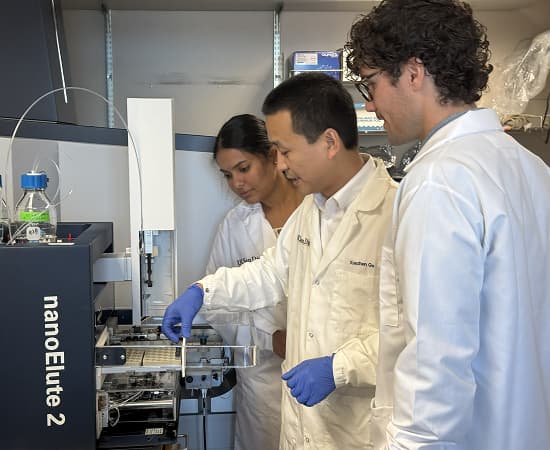
Research Directions
Proteostasis Regulation
Understanding how cells regulate the synthesis, folding, and degradation of proteins to maintain cellular health.
Cellular Stress Responses
Exploring how cells respond to stress conditions to alter cellular stress resilience.
Proteostasis Network and Aging
We apply global and molecular approaches to manipulate the proteostasis network to improve tissue function during aging.
Ubiquitin Biology
Identifying and characterizing ubiquitin-dependent mechanisms that regulate cellular quality control pathways
Recent Publications
Proteostasis sustains T cell differentiation potential and tumor-infiltrating lymphocyte function
Scharping NE, Ge X, Matias MI, Jiang F, Cafferata A, Heeg M, Monell A, Galletti G, Cheung KP, Rock A, Thao N, Shuttleworth SL, Bauer MA, Takehara KK, Ferry A, Quon S, Koss B, Myers SA, Bennett EJ, Goldrath AW.
Cell. 2026 Apr 29:S0092-8674(26)00226-6. doi: 10.1016/j.cell.2026.02.019.
PMID: 42061400
Employing Expression-Matched Controls Enables High-Confidence Proximity-Based Interactome Classification
Jiang F, Ge X, Bennett EJ.
Mol Cell Proteomics. 2025 Jul;24(7):101001. doi: 10.1016/j.mcpro.2025.101001.
PMID: 40441440
Neuronal aging causes mislocalization of splicing proteins and unchecked cellular stress
Rhine K, Li R, Kopalle HM, Rothamel K, Ge X, Epstein E, Mizrahi O, Madrigal AA, Her HL, Gomberg TA, Hermann A, Schwartz JL, Daniels AJ, Manor U, Ravits J, Signer RAJ, Bennett EJ, Yeo GW.
Nat Neurosci. 2025 Jun;28(6):1174-1184. doi: 10.1038/s41593-025-01952-z. Epub 2025 Jun 2.
PMID: 40456907
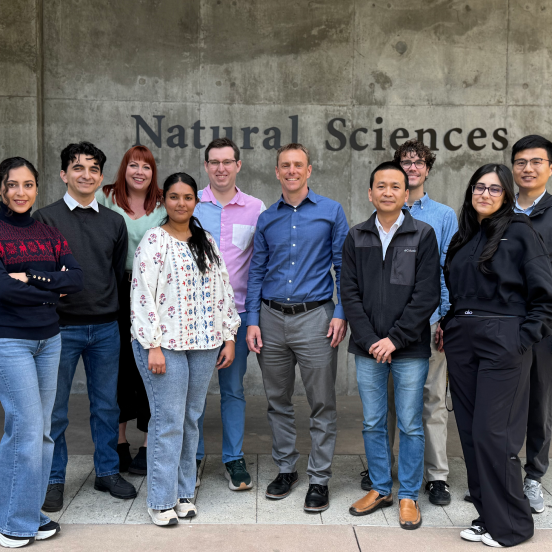
Meet the Research Team
The Bennett Lab brings together scientists, researchers, and students
who share a passion for understanding the molecular mechanisms of
aging and cellular biology. Our team collaborates across disciplines to
push the boundaries of scientific discovery.
Inside the Lab
Take a closer look at our research environment, laboratory activities, and collaborative projects. Our gallery highlights the work, people, and moments that drive scientific discovery in the Bennett Lab.
- Fun collaboration with our favorite T-cell experts. Nicole’s tour de force establishes that terminally exhausted tumor-infiltrating lymphocytes have reduced expression of three key ubiquitin ligases and signatures of proteostasis dysfunction.
- Xuezhen and Fulin spearheaded some truly stunning deep proteomics from in vivo isolated T-cell populations. Congrats to everyone involved.
AJ presents her research at the 2026 Keystone Hematopoiesis conference
AJ's abstract was selected for a short talk!!
Collaborative study with the Lykke-Andersen lab selected for prize in RNA Journal
- Congrats to Tim and all the authors that participated in this study.
Join Our Research Team
Get in Touch
e1bennett@ucsd.edu
Research Collaboration Inquiries
We welcome partnerships with academic and industry researchers.
Student and Postdoc Opportunities
Reach out to learn about open positions in our lab.